





increase in memberships
new markets nationwide
new members
The Challenge
The Y faced a critical business challenge: their health clubs served as the primary funding mechanism for their broader community mission, yet they competed in a category defined by parity in both facilities and advertising. With competitors outspending them 10-to-1 on marketing that emphasized cutting-edge equipment and spa-like amenities, the Y needed to differentiate their gyms while appealing to the broadest range of people of all incomes.

Superficial sameness
The fitness industry had fallen into a predictable pattern—flashy facilities, generic promises of self-improvement and an endless stream of promotional pricing offers—showcased by perfectly toned models in spandex. This mono-dimensional portrayal ignored the complex, deeply personal motivations that actually get people to join fitness facilities.

Everyone has their own reason Y
Through research, we uncovered a powerful insight: people’s motivations for working out were as diverse as the individuals themselves. Whether driven by stress relief, social connection, skill development, kid wrangling, or getting back into a favorite pair of jeans, these personal reasons created motives far stronger than any facility feature or promotional offer.
The Idea
Ever outrun a bear because your glutes were Y-strong? Escaped alien abduction thanks to cardio gains? Our TV work celebrated the hilarious, honest, deeply personal reasons people join the Y—from fitting back into dryer-shrunk jeans to preparing for improbable wildlife encounters. The creative rejected fitness industry clichés of lycra models and spa amenities, instead spotlighting authentic motivations that made people laugh, share, and consider their own “reason Y.”

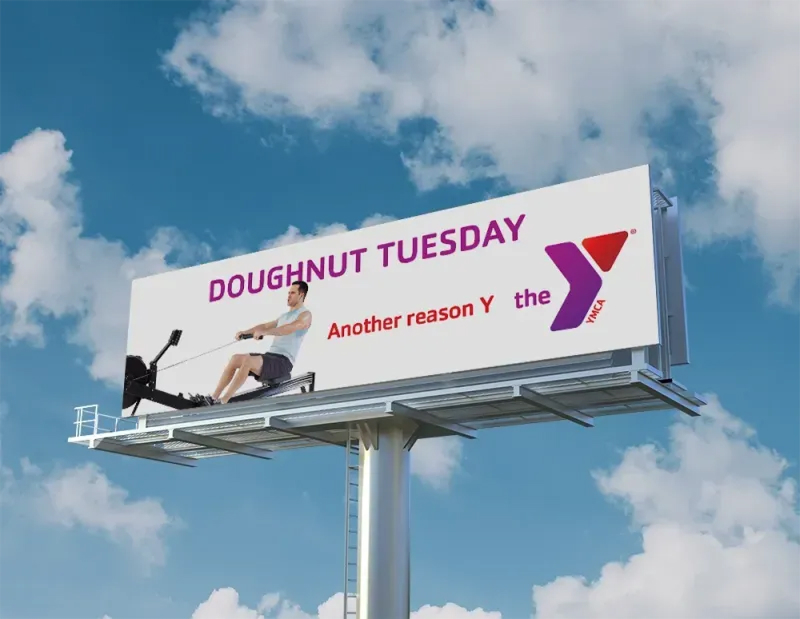
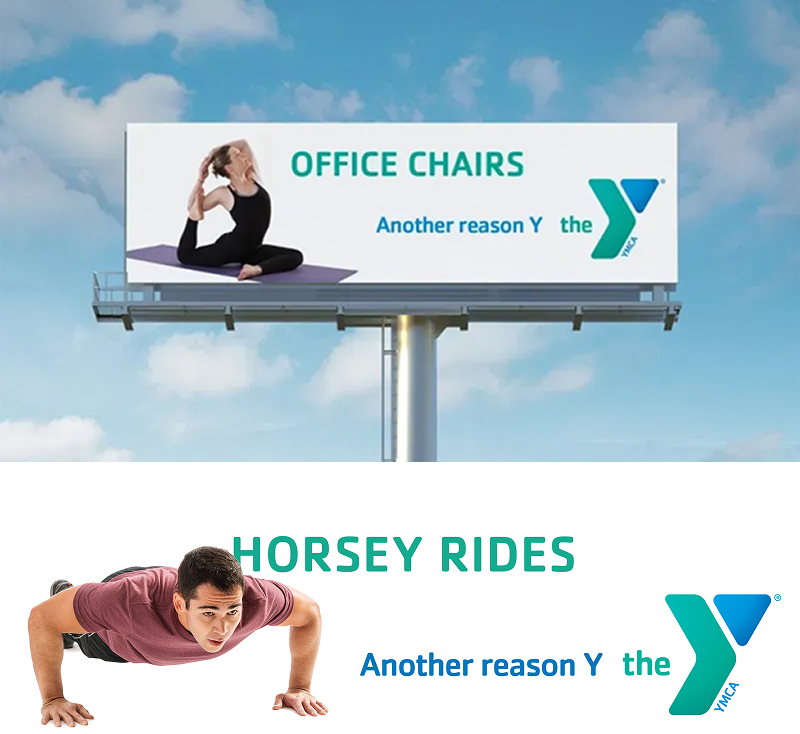
While competitors cluttered billboards with bodies and equipment, our OOH work stopped scrollers with just a few words. “Donut Tuesday” reminded commuters exactly why they needed the Y before hitting the break room. Office chairs hinted at sedentary guilt without saying a word. Strategic placements turned everyday commutes into membership consideration moments, proving restraint hits harder than repetition when the insight is sharp enough.